Hoarding cleanup Property Managers London
Every property manager eventually gets the phone call. A unit turnover that should have taken a single day suddenly cannot happen because the space behind the door looks nothing like what the lease inspection notes ever described. There is no good way to fully prepare for that call, but there is a good way to handle everything that comes after it.
This guide covers how hoarding cleanup works specifically for property managers in London, Ontario, where the priorities are different from a typical residential job, turnaround time, documentation, and getting a unit back to a fully rentable condition without unnecessary drama along the way.
Why Is This Different From a Standard Cleanout for Property Managers?
Timeline pressure is the single biggest difference between the two situations. A residential estate cleanout usually has some flexibility built in. A rental unit sitting empty is losing money every day it stays that way, which means hoarding cleanup for a property manager needs to move fast without cutting corners that could cause problems later, whether that is missed items that resurface during a walkthrough or damage caused by rushing through a tight space.
Pam Thomas captured this exact relationship in a five star review, noting that her company uses Junk Ranger “at all our commercial properties” and has found the rates “extremely fair” with staff that are “always extremely professional” and service that gets a unit “done right the first time.” That kind of repeat, ongoing relationship is common with property managers who need a crew they do not have to explain their standards to all over again every time.
How Fast Can a Unit Actually Be Turned Around?
It depends on the scope, and an honest answer upfront is worth more than an optimistic one that falls apart mid job. Some units clear in a day. Others, particularly those with years of accumulation, take longer, and Daniel will say so directly during the initial walkthrough rather than promising a timeline that puts the turnover date at risk.
What every job gets regardless of scope is a realistic estimate before work starts, so a property manager can plan the rest of the turnover schedule, cleaning, repairs, showings, around an accurate date rather than a hopeful one. That estimate accounts for access as much as volume, since a unit on a third floor without an elevator takes longer to clear than a similarly sized ground floor unit, and factoring that in upfront avoids a timeline slipping once the work is already underway.
Is Documentation Available for Property Management Records?
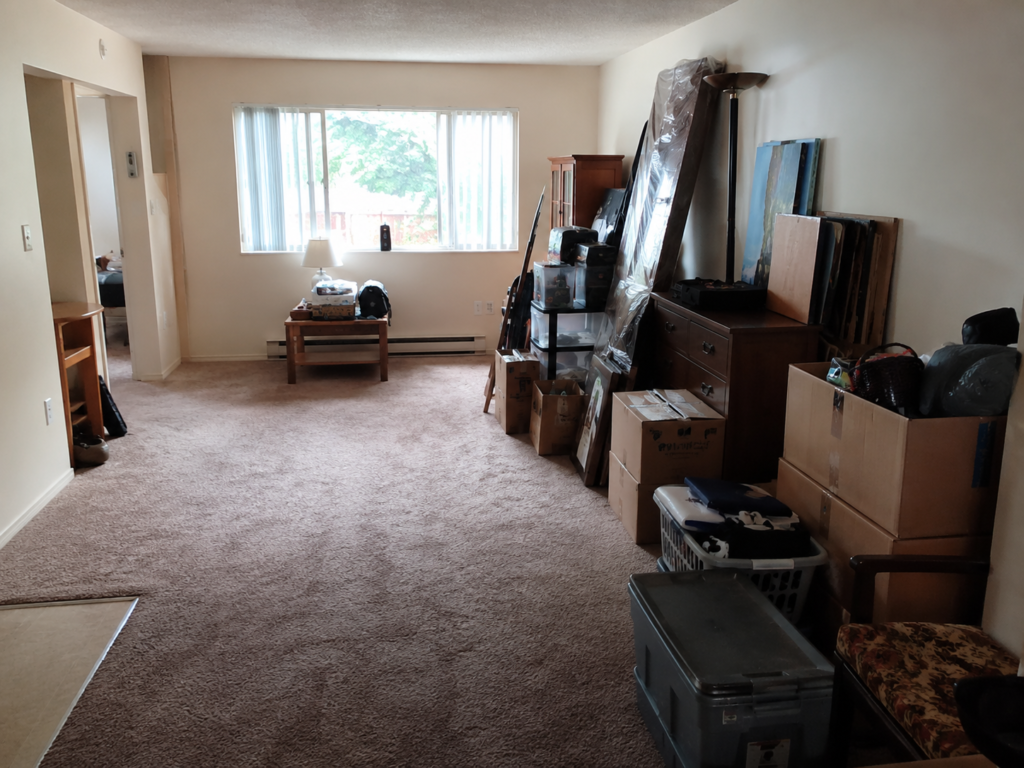
Photos before and after the cleanout are standard practice, useful for a property manager’s own file, for insurance purposes, or for documentation tied to the tenancy itself. That paper trail matters more in a property management context than it typically does for a single family homeowner, since a unit turnover often needs to be accounted for beyond just getting the space clean.
This kind of documentation also protects the property manager if a dispute ever comes up later about the unit’s condition at handover, giving a clear record of what the space looked like before and after the crew was on site.
Does the Crew Have Experience With This Specific Situation?
Yes, directly, not through a certification or a course but through the kind of experience that comes from doing the work. Daniel has handled hoarding cleanup jobs for property managers on retainer and under yearly contracts, which means the crew is not encountering this scenario for the first time when a call comes in. No certification gets claimed here, because none is needed, real experience across a range of properties is what actually matters when a unit needs to be cleared quickly and correctly.
That experience shows up in the details that matter to a property manager specifically, moving efficiently without damaging flooring or walls that need to stay in rentable condition, working around building rules for elevator bookings or loading dock access, and communicating clearly with building staff or other tenants who may be affected by the job.

What Gets Removed and What Requires Extra Care?
Most of the unit’s contents fall under general removal, similar to standard furniture removal but at a larger scale, and certain categories need specific handling beyond that. Appliances left behind get processed through appliance removal under Ontario’s environmental rules rather than going out with general contents. Any renovation or repair material needed to bring the unit back to rentable condition becomes renovation debris removal once the space is cleared. If the unit has outdoor space that also needs attention, yard waste or a landscaping cleanup can be scheduled in the same visit.
Basement and garage units, or properties with additional storage areas, follow the same process covered in basement and garage cleanouts, scaled to whatever the unit actually includes. For situations closer to a full property than a single unit, the approach lines up with a standard estate cleanout instead, just under a property management timeline rather than a family one. Multi unit buildings sometimes need more than one of these categories addressed in the same visit, and the crew scopes for that during the initial walkthrough rather than discovering it partway through the job.
How Does Pricing Work for Property Managers?
The same volume and access based pricing mechanism applies to property management jobs, and the full pricing breakdown covers what different job sizes typically involve. Property managers working with Junk Ranger repeatedly benefit from a team that already understands their properties, their standards, and their timeline expectations, which tends to make each subsequent job faster than the last.
Does It Make Sense to Set Up an Ongoing Arrangement?
For property managers handling more than an occasional turnover, an ongoing relationship rather than a one off call each time tends to work better for everyone involved. A crew that already knows a portfolio of properties needs less explanation at the start of each job, and a property manager gets a consistent point of contact instead of explaining expectations all over again to a different provider every time a unit needs clearing.
This is exactly the kind of relationship Pam Thomas describes using across multiple commercial properties, where consistency in rates, professionalism, and quality matters more over time than any single job on its own.
What If a Single Item Needs to Come Out Quickly?
Same day options exist here too for smaller situations. The process covered in this guide to same day couch removal applies just as well to a single piece left behind in an otherwise standard turnover, without needing a full hoarding cleanup booking for just one item.
What Areas Get This Service for Property Managers?
Hoarding cleanup for property managers is available across Old South, Byron, Masonville, Hyde Park, Lambeth, Wortley Village, Westminster, Argyle, Westmount, Old East Village, Downtown London, White Oaks, Riverbend, Summerside, and Sunningdale, along with the nearby communities of St. Thomas, Strathroy, Aylmer, Ingersoll, and Dorchester.
A difficult unit turnover does not need to become a recurring headache every time a lease ends. Call 226 212 2629 to talk through the scope, and Daniel’s team can build a plan around the timeline the turnover actually needs, not an idealized one.